Saharan AI vs. Canva: Which Is Better for Amazon Listing Design?
Canva is great for general design, but Amazon sellers need more than nice-looking graphics. This comparison breaks down Saharan AI vs. Canva for Amazon listing images, A+ Content, and conversion-focused product visuals — so Amazon sellers can choose the right tool for launching faster, improving listings, and reducing design costs.
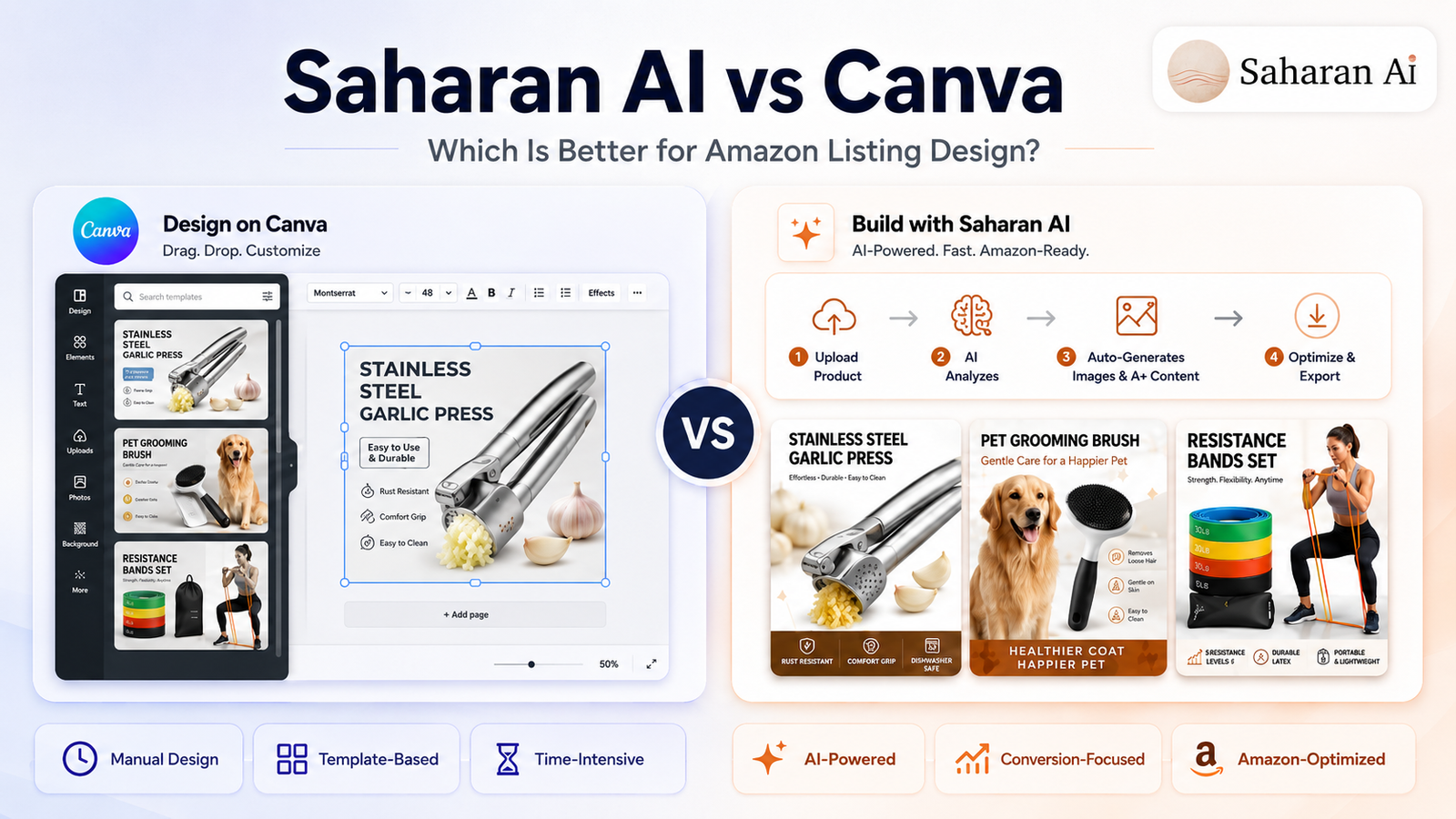
If you sell on Amazon, your product images directly affect click-through rate and conversion rate. A kitchen utensil set with weak listing images will lose to a competitor with cleaner visuals and better buying logic — even if the actual product is better.
That is why many Amazon sellers are now comparing general design tools like Canva with AI-native Amazon listing AI agent like Saharan AI.
Both tools help you create graphics. But they solve very different problems.
This guide breaks down the differences between Saharan AI and Canva specifically for Amazon sellers, private label brands, and agencies managing listings.
Quick Comparison: Saharan AI vs. Canva
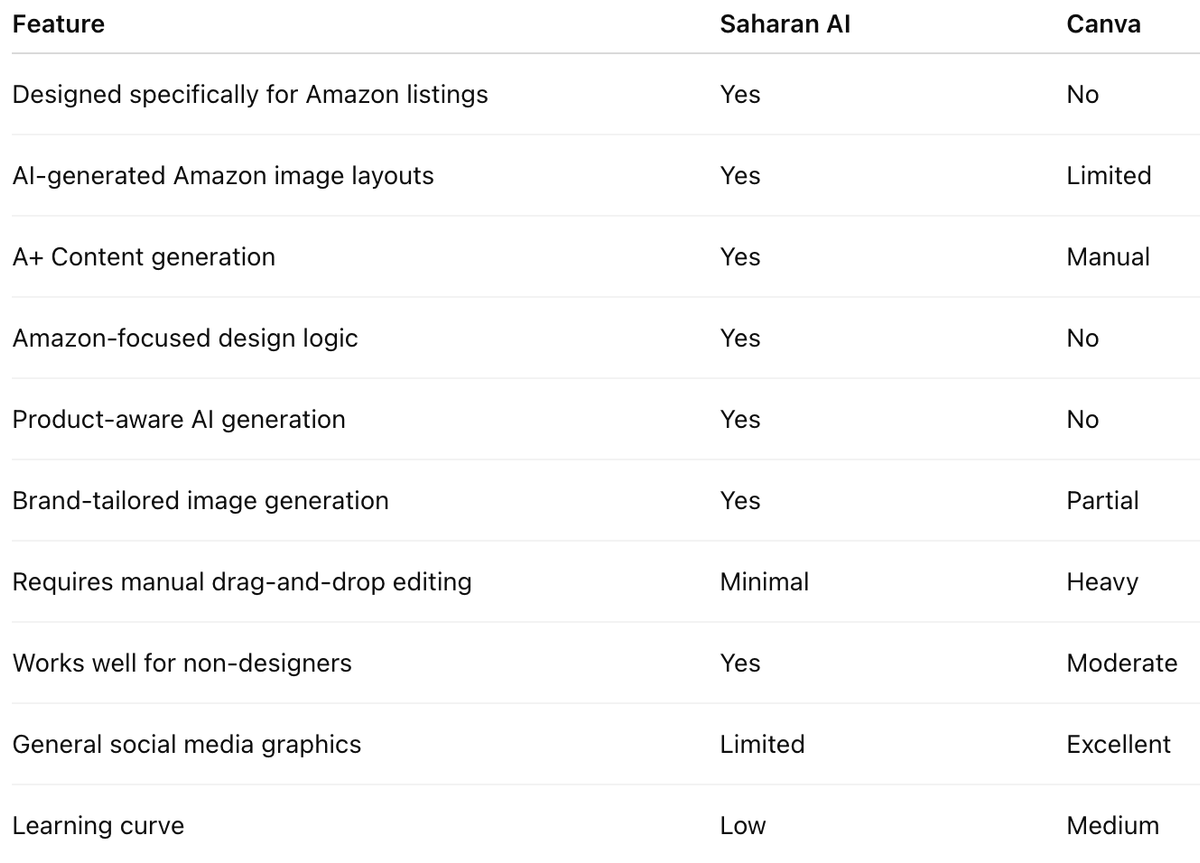
For Amazon sellers, the biggest difference is simple:
Canva is a general graphic design tool.
Saharan AI is built specifically for Amazon listing optimization.
What Canva Is Good At
Canva is one of the most popular design tools in the world.
It works well for:
- Instagram posts
- Flyers
- Packaging mockups
- Presentation slides
- Simple product infographics
- Brand mood boards
For example, if you sell fitness equipment and want to make a quick promotional banner for social media, Canva is fast and flexible.
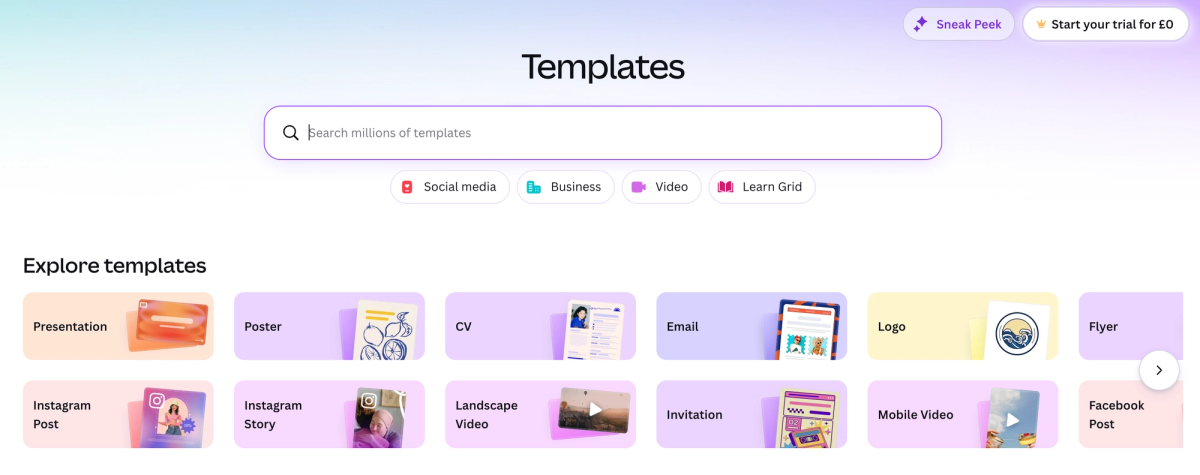
The main advantage of Canva is customization.
You can:
- Drag and drop elements
- Use templates
- Upload logos
- Edit text manually
- Resize designs
- Collaborate with team members
For experienced designers, Canva is useful because it gives full manual control.
But Amazon listing design has different requirements from general graphic design.
And that is where many sellers run into problems.
The Problem With Using Canva for Amazon Listings
Amazon listing images are not just “nice graphics.”
High-converting listings usually follow a structured decision flow:
- Grab attention in search results
- Explain the product instantly
- Build trust
- Show use cases
- Differentiate from competitors
- Reduce buying hesitation
Most Canva templates are not designed around Amazon conversion logic.
So sellers often end up with:
- Overcrowded images
- Weak mobile visibility
- Generic layouts
- Inconsistent branding
- Random icon placement
- Poor feature hierarchy
For example:
A pet supplies seller might create a visually attractive dog grooming brush infographic in Canva. But if the key product benefit is not visible in the first second on mobile, the image may still convert poorly.
Similarly, kitchen tool brands often use too much small text in comparison charts that becomes unreadable on Amazon mobile search.
This is why many Amazon sellers eventually hire expensive agencies or freelancers for listing optimization.
How Saharan AI Is Different
Saharan AI approaches listing design differently.
Instead of starting with blank templates, it starts with Amazon-specific design logic.
The system is built around:
- Product positioning
- Buyer psychology
- Amazon image structure
- Competitor analysis
- Conversion-focused layouts
For example, if you upload a stainless steel kitchen organizer, the AI does not just create random lifestyle graphics.
It identifies likely selling angles such as:
- Space-saving
- Premium material quality
- Countertop organization
- Modern kitchen aesthetics
- Easy cleaning
Then it structures the listing images around those buying decisions.

This matters because Amazon shoppers scan quickly.
Good listing images reduce cognitive load.
Instead of simply “looking nice,” the images guide customers toward purchase decisions.
Amazon Sellers Usually Care About Speed and Conversion
Most Amazon sellers are not full-time designers.
They care about:
- Launching products faster
- Improving conversion rate
- Lowering creative costs
- Testing new angles quickly
- Creating consistent branding across SKUs
This is where AI-native Amazon listing tools become useful.
For example:
A fitness resistance band seller may want to test:
- Home workout positioning
- Gym performance positioning
- Beginner-friendly messaging
- Premium athlete branding
Traditionally, this requires multiple design revisions from freelancers.
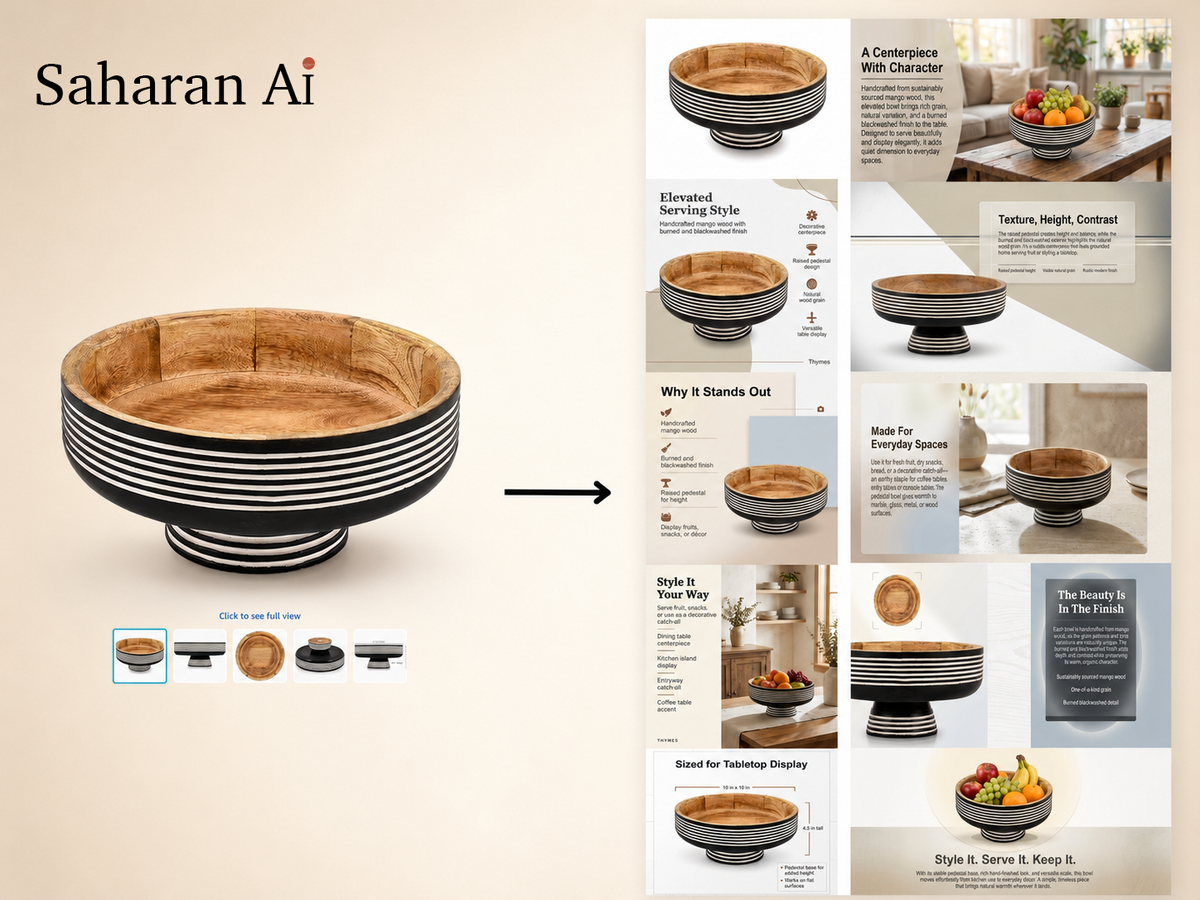
With an Amazon listing image tool built specifically for listing optimization, sellers can test variations much faster.
Canva vs. Saharan AI for Different Seller Types
If You Are a Beginner Amazon Seller
If you are launching your first private label product, Canva may feel overwhelming because you still need to:
- Understand Amazon image structure
- Design layouts manually
- Research competitors
- Decide feature hierarchy
- Create branding consistency yourself
Saharan AI simplifies this process because the layouts are already optimized around Amazon listing logic.
This is especially useful for:
- Kitchen gadgets
- Pet accessories
- Beauty products
- Home organization products
- Fitness accessories
If You Already Have a Design Team
Canva may still be useful internally.
Many established brands use Canva for:
- Internal collaboration
- Social media content
- Promotional banners
- Presentation materials
But for Amazon-specific listing optimization, many teams still rely on specialized Amazon listing design software or agencies.
In practice, some sellers use both:
- Canva for marketing assets
- Saharan AI for Amazon detail page generation
Which Tool Produces Better Amazon Listing Images?
This depends on what you optimize for.
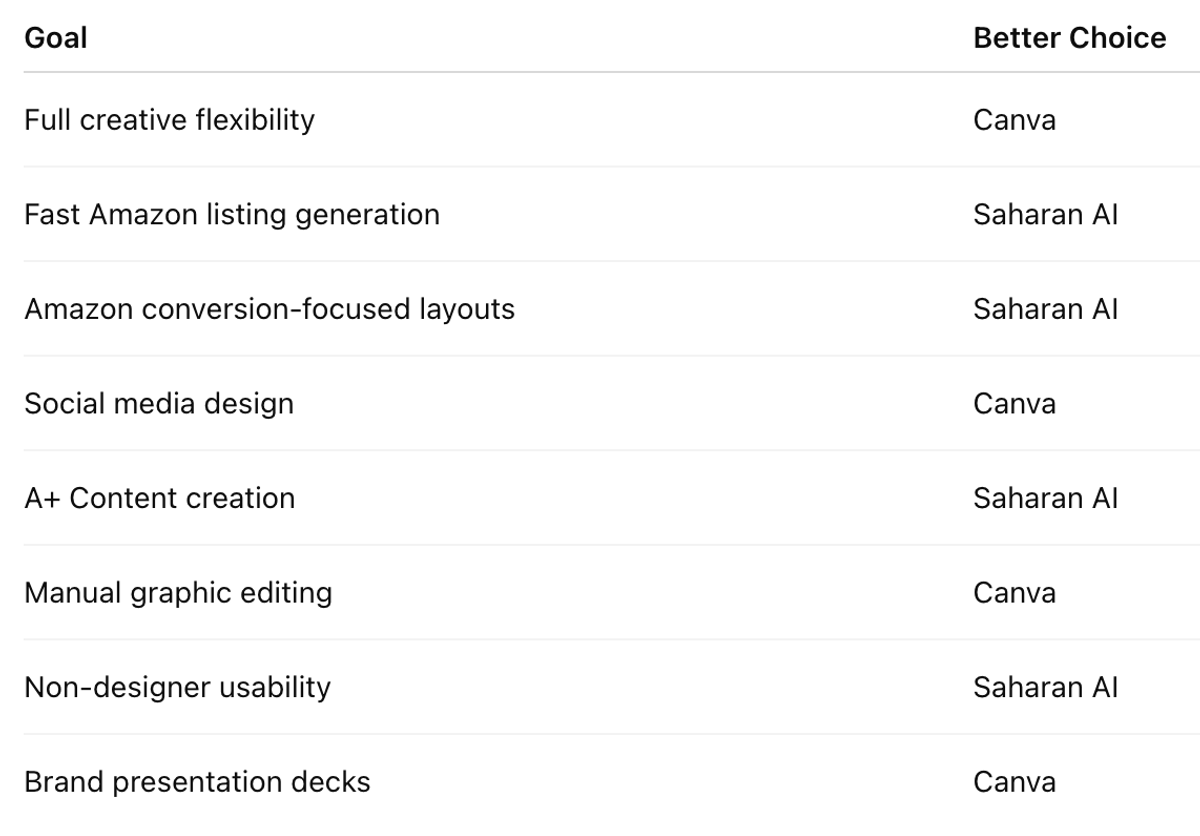
If your primary goal is improving Amazon detail pages, Canva alone usually requires significantly more manual work.
What About Hiring an Amazon Listing Design Service?
Many sellers still hire agencies or freelancers instead of using software.
A traditional amazon listing design service may charge:
- $50–$200 per image
- $300–$2,000 for full A+ Content
- Additional revision costs
- Multi-day turnaround times
This can still make sense for premium brands with complex creative requirements.
But many sellers now prefer AI-assisted workflows because they can:
- Generate faster iterations
- Test multiple concepts
- Reduce design costs
- Launch products faster
Especially for large catalogs, manual agency workflows become difficult to scale.
FAQ
Is Canva good for Amazon listing images?
Yes, but it requires more manual work. Sellers still need to understand Amazon conversion logic, image hierarchy, and mobile optimization themselves.
What is the best Amazon listing design software?
It depends on your workflow. Canva is strong for general design flexibility, while specialized tools like Saharan AI focus more on Amazon-specific conversion optimization and listing structure.
Can AI-generated Amazon images actually improve conversion rate?
They can if the design logic is strong. High-converting Amazon images usually communicate benefits faster, reduce confusion, and improve perceived product quality.
Should I hire an amazon listing design service instead?
For premium brands or highly customized creative work, agencies can still make sense. But many sellers now use AI tools first because they are faster and cheaper for testing listing variations.
What types of products benefit most from Amazon-focused design tools?
Products with heavy competition usually benefit the most. This includes kitchen tools, fitness accessories, pet products, beauty products, and home organization items.
Final Thoughts
Choosing between Canva and Saharan AI depends on what you actually need.
If you want a flexible general design platform for many types of content, Canva is excellent.
But if your main goal is building high-converting Amazon detail pages faster, a specialized amazon listing image tool built around Amazon buying behavior can save significant time and reduce creative guesswork.
Most importantly, good Amazon listing design is not just about aesthetics.
It is about helping customers understand the product quickly, trust the product faster, and make purchase decisions more confidently.