Private Label Amazon: The Complete Guide to Building a Profitable Brand in 2026
Over 54% of Amazon sellers use the private label model — and for good reason. This complete guide walks you through every step of building a private label brand on Amazon, from product research and sourcing to listing optimization and scaling, with real examples of brands that made it work.
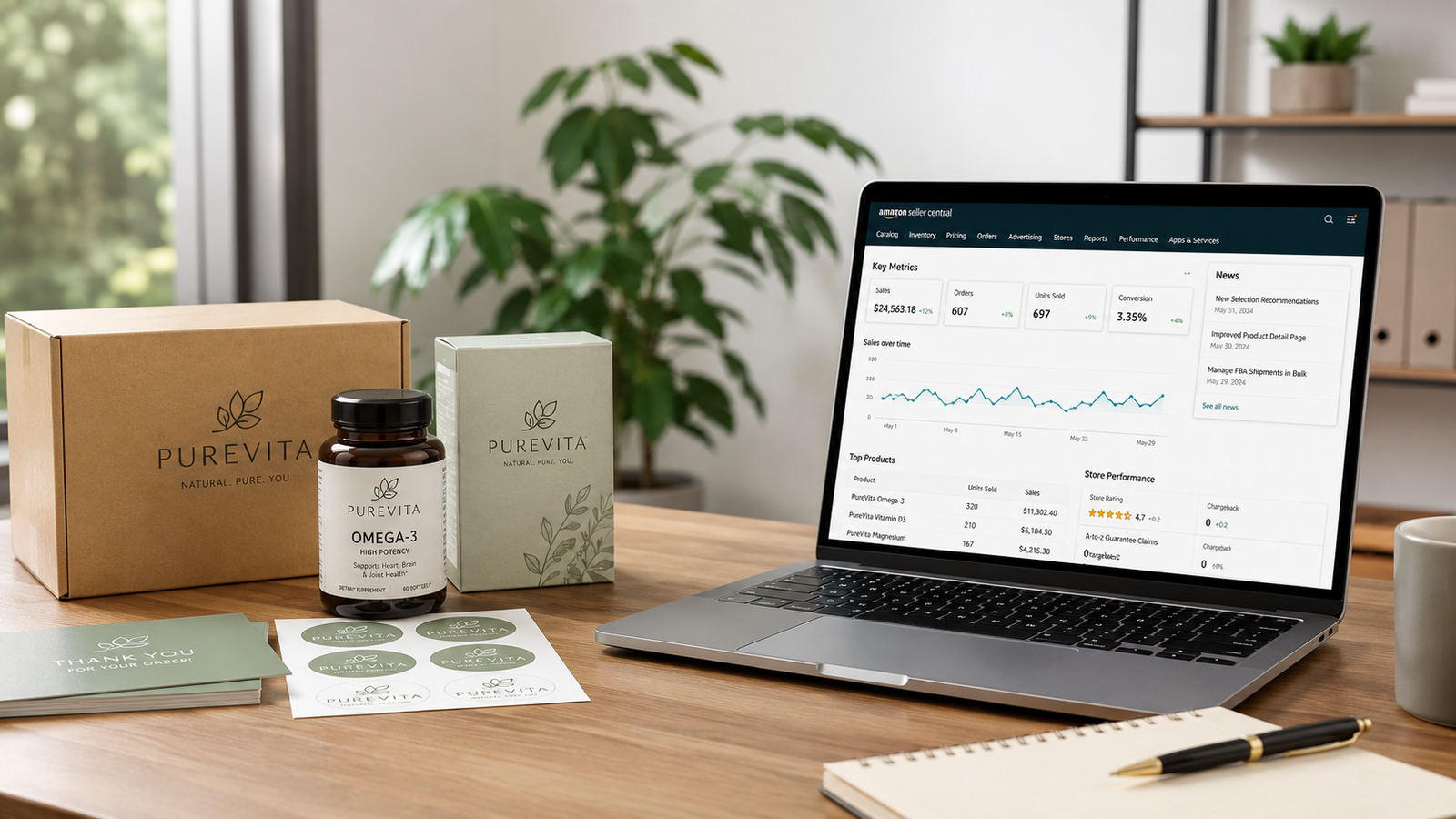
If you've been researching ways to build a real, scalable business on Amazon, you've almost certainly come across the term "private label." It's not a new concept — retailers like Costco (Kirkland Signature), Target (Up & Up), and Walmart (Great Value) have been doing it for decades. But what's changed is that Amazon has made this model accessible to independent sellers, and the opportunity in 2026 is bigger than ever.
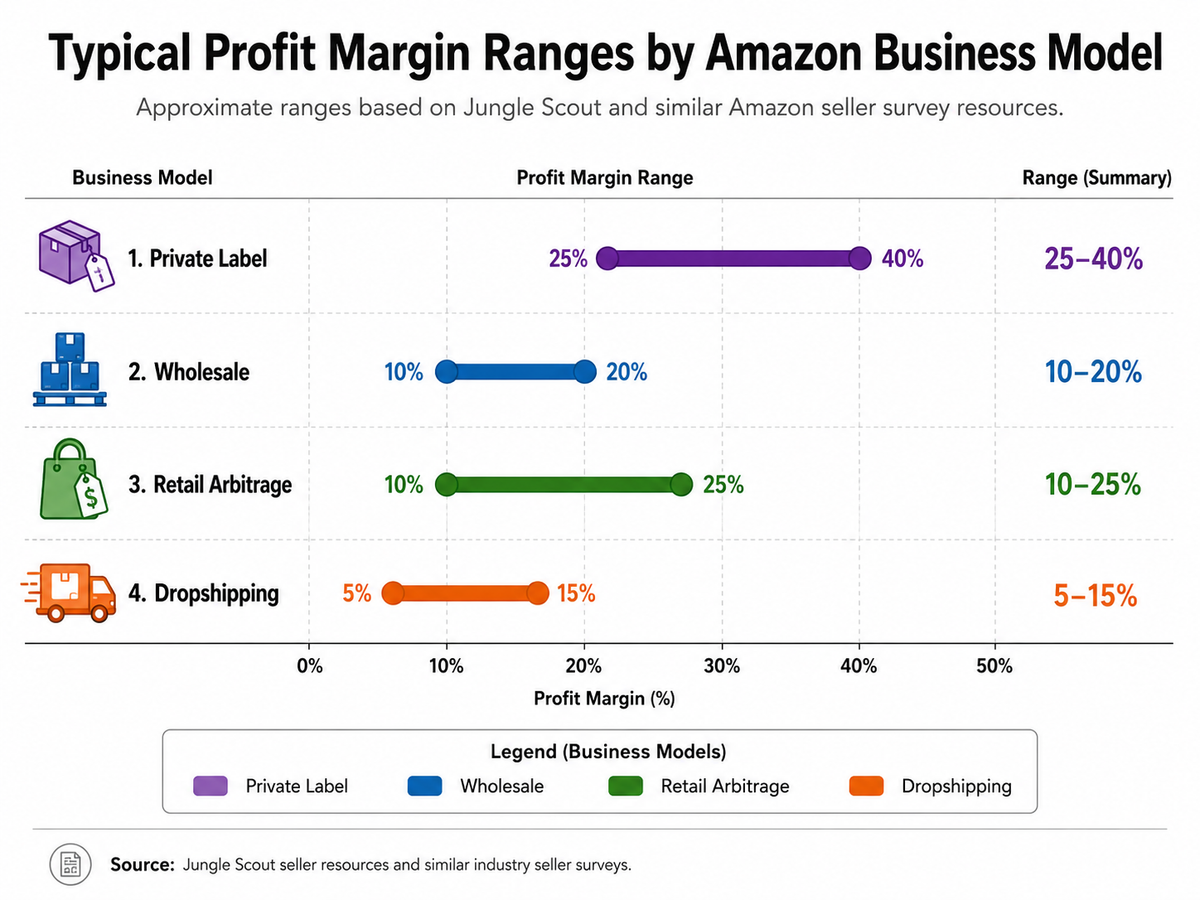
Over 54% of Amazon sellers now use the private label business model, making it the most popular approach on the platform. And the economics are compelling: private label sellers typically earn profit margins between 25% and 40%, compared to just 10–20% for wholesale and arbitrage models.
This guide covers everything you need to know — from how the model works, to real examples of private label brands that have scaled, to the exact steps you need to follow to build one yourself.
What Is Private Label on Amazon?
A private label product is an item manufactured by a third party but sold under your own brand name. You don't invent the product from scratch — instead, you find a product that already sells well, work with a manufacturer to produce your own version, and brand it with your logo, packaging, and identity.
Here's the simplest way to think about it: the manufacturer makes the product, but you own the brand.
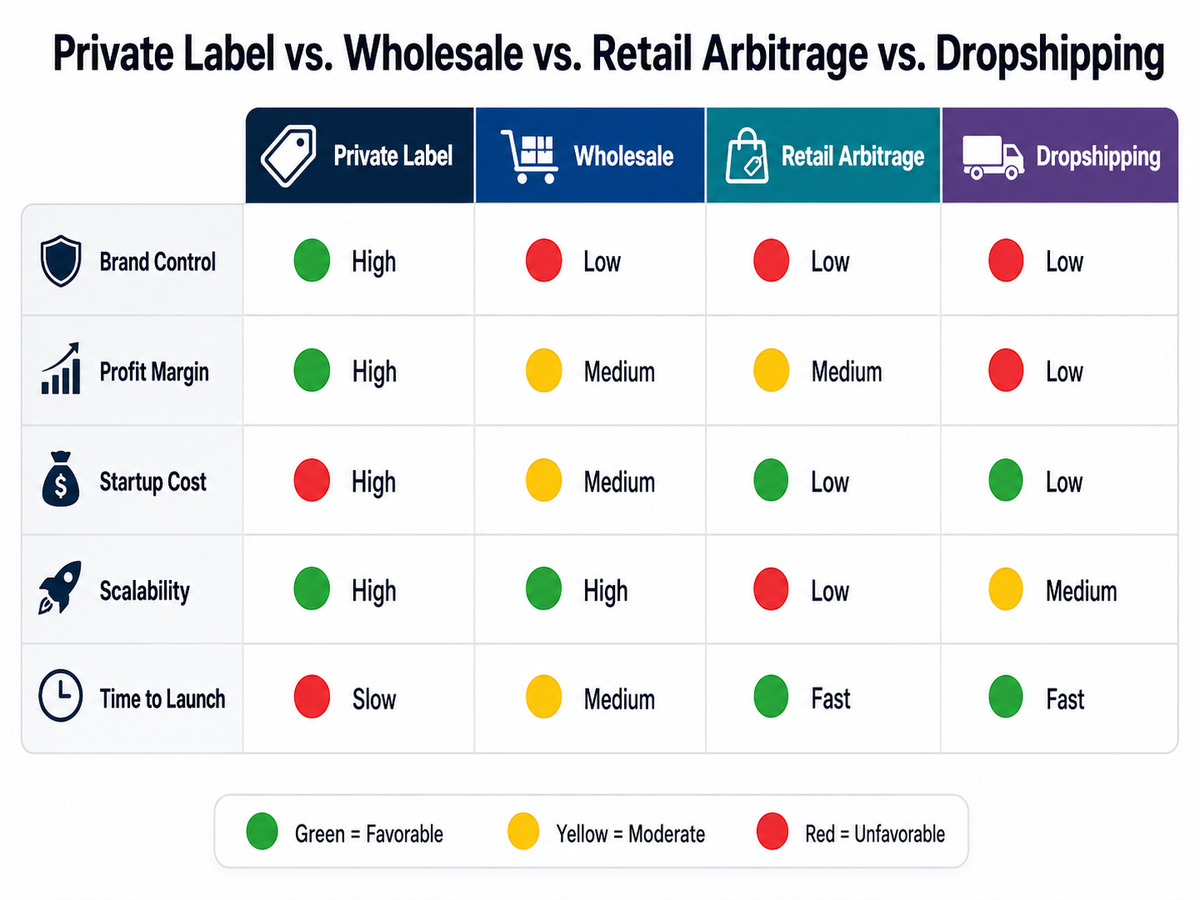
This differs from wholesale (where you resell someone else's brand) and retail arbitrage (where you buy discounted goods and flip them on Amazon). With private labelling, you control the product, the pricing, the listing, and the customer experience.
Amazon's own private label brands — AmazonBasics, Amazon Essentials, Solimo, Pinzon — follow the exact same model. Amazon works with manufacturers to produce products and sells them under house brand names. Independent sellers can do the same thing at a smaller scale using Amazon FBA.
Why Private Label Is the Most Profitable Amazon Model
The reason so many sellers choose the private label route comes down to margin, control, and long-term value.
Higher profit margins. Private label sellers typically see 25–30% net margins — and experienced operators push past 40%. Wholesale and arbitrage sellers usually land in the 10–20% range because they're competing on price with dozens of other sellers offering the exact same product.
Brand ownership. When you sell wholesale, you don't own the listing, and you're fighting for the Buy Box against other sellers. With a private label product, you own the listing outright. No competition on your ASIN.
Long-term equity. A private label brand is a real business asset. You can expand into new products, build a customer base, and eventually sell the brand. Amazon brand aggregators have spent billions acquiring private label businesses — companies like Thrasio, Perch, and Berlin Brands Group built entire empires around acquiring profitable private label brands.
Access to Amazon's brand tools. Once you register your brand through Amazon Brand Registry, you unlock A+ Content (Enhanced Brand Content), Brand Stores, Sponsored Brands ads, and the Vine review programme. These tools are not available to generic resellers and give you a significant competitive edge in conversion and visibility.
Real Examples of Successful Private Label Brands
It's one thing to talk about private labelling in theory. Here are real brands — both Amazon's own and independent sellers — that prove the model works.
Amazon's Own Private Label Brands
Amazon now operates roughly 400 private label brands across hundreds of thousands of products. Some notable ones:
- AmazonBasics — Launched in 2009, it's Amazon's best-selling private label, covering electronics accessories, home goods, and office supplies. AmazonBasics batteries alone captured a massive share of the market, outselling Duracell and Energizer on the platform at roughly half the price.
- Amazon Essentials — Affordable clothing for men, women, and children with over 68,000 reviews and an average price under $20.
- Solimo — Everyday household goods from personal care to pet products, launched in 2009.
- Pinzon — Bedding and towels, one of Amazon's very first private labels.
- Amazon Elements — Health supplements and vitamins, exclusive to Prime members.
Independent Private Label Success Stories
- Anker — Perhaps the best-known private label success on Amazon. Started as an Amazon-only brand selling affordable phone chargers and power banks, Anker grew into a global consumer electronics company with sub-brands like Soundcore (audio), Eufy (smart home), and Nebula (portable projectors).
- Lume Deodorant — Created by Dr. Shannon Klingman, Lume started as a private label product solving a specific customer pain point. It grew into a multi-million dollar brand that expanded from Amazon into retail.
- Gorilla Grip — A home goods brand known for bath mats and kitchen products, built entirely through Amazon private labelling with strong reviews and competitive pricing.
These brands demonstrate a clear pattern: start with a focused product solving a real need, nail the listing, build reviews, and scale from there.
How to Start a Private Label Amazon Business: Step by Step
Step 1: Product Research
This is where most sellers either succeed or fail. The goal is to find a product with strong demand, manageable competition, and healthy margins.
What to look for:
- Products with consistent search volume (use tools like Jungle Scout, Helium 10, or Amazon's own search suggestions)
- Products in the $15–$50 price range (high enough for margin, low enough for impulse purchases)
- Items with top-ranking competitors getting 100–500 reviews (there's demand, but you're not fighting against 10,000-review listings)
- Small, lightweight items (lower shipping and FBA fees)
- Products where you can spot improvement opportunities in negative reviews ("I wish this had..." is your product development brief)
Categories with strong potential in 2026: Beauty & Personal Care, Home & Kitchen, Pet Supplies, Sports & Outdoors, and Health & Wellness are consistently among the top-performing private label categories. Trending items include zero-waste personal care products, pet grooming tools, and portable fitness accessories.
Step 2: Find a Reliable Supplier
Once you've validated your product idea, you need a manufacturer. Most private label sellers source from overseas manufacturers — particularly in China, India, and Vietnam — though domestic suppliers are increasingly popular for faster shipping and perceived quality advantages.
Where to find suppliers:
- Alibaba — The largest B2B marketplace for finding manufacturers. Look for "Gold Suppliers" and "Trade Assurance" sellers.
- Global Sources — Another major sourcing platform, often with higher-quality suppliers.
- Domestic directories — ThomasNet (US), Maker's Row (US), or local trade shows for UK and European manufacturers.
Critical steps:
- Always order samples from at least 3–5 suppliers before committing
- Negotiate MOQs (minimum order quantities) — many suppliers will lower them for a first order
- Request certifications and compliance documentation (especially for products that touch skin, food, or children)
- Establish clear communication about quality expectations, packaging, and labelling
Step 3: Build Your Brand Identity
Your brand is what differentiates your private label product from the dozens of similar items on Amazon. This goes beyond just a logo — it's your packaging, your product photography, your listing copy, and the experience the customer has from first click to unboxing.
Essential branding elements:
- Brand name — Something memorable, easy to spell, and available as a trademark
- Logo and visual identity — Consistent across your packaging, listing images, and storefront
- Packaging design — Custom packaging signals quality and professionalism. It's one of the easiest ways to stand out from white-label competitors
- Brand story — Why does your brand exist? What problem does it solve? This becomes the foundation of your A+ Content and Brand Store
Register your trademark as early as possible. You'll need it for Amazon Brand Registry, which unlocks A+ Content, Brand Analytics, and other tools that directly impact your conversion rate.
Step 4: Create a High-Converting Amazon Listing
Your listing is your storefront. On Amazon, you don't get a second chance to make a first impression — your main image, title, and price determine whether shoppers click, and your bullet points, A+ Content, and reviews determine whether they buy.
Listing components that matter most:
- Main image — White background, product fills 85% of the frame, professional photography (not phone shots)
- Secondary images — Lifestyle shots, infographics showing features and dimensions, comparison charts, packaging shots
- Title — Include your primary keyword ("Private Label [Product Type]"), brand name, key features, and size/quantity. Stay under 200 characters.
- Bullet points — Lead with benefits, not features. Address common customer objections found in competitor reviews.
- A+ Content — Use Enhanced Brand Content to tell your brand story, add comparison modules, and include rich imagery below the fold. Listings with A+ Content see an average conversion increase of 5–10%.
- Backend keywords — Use all available search term fields. Include Spanish translations, common misspellings, and related terms.
This is where tools like Saharan AI can dramatically reduce the time and effort involved. Instead of spending hours manually designing A+ Content modules and crafting listing copy, AI-powered listing tools can generate optimised content, suggest keyword placement, and produce Amazon-compliant designs in minutes.
Step 5: Launch and Drive Initial Sales
A new private label product has zero reviews and zero sales history. Amazon's algorithm favours products that are already selling well, which creates a chicken-and-egg problem. Here's how to break through it.
Launch strategies that work in 2026:
- Amazon PPC (Pay-Per-Click) — Start with automatic campaigns to discover which keywords convert, then build manual campaigns around your best performers. Budget $20–$50/day initially.
- Amazon Vine — Enrol your product in the Vine programme to get early reviews from trusted reviewers. This is one of the fastest legitimate ways to build social proof.
- External traffic — Drive traffic from social media, email lists, or influencer partnerships. Amazon rewards listings that bring traffic from outside the platform.
- Promotions and coupons — Use Amazon's coupon feature and Lightning Deals to boost visibility during launch. The green coupon badge increases click-through rate significantly.
- Product inserts — Include a branded insert card asking (not incentivising) customers to leave a review. Keep it compliant with Amazon's Terms of Service.
Step 6: Scale and Expand
Once your first product is generating consistent sales and reviews, it's time to think about growth.
Scaling strategies:
- Launch complementary products — If your first product is a yoga mat, add yoga blocks, straps, and carrying bags. Building a product line within a niche increases average order value and strengthens your brand.
- Expand to new marketplaces — Amazon operates in the US, UK, Germany, Japan, and many other countries. Many private label sellers find untapped demand by expanding internationally.
- Build a brand storefront — Your Amazon Brand Store is your mini-website within Amazon. Use it to cross-sell, tell your brand story, and capture traffic from Sponsored Brands ads.
- Diversify beyond Amazon — Successful private label brands eventually expand to their own Shopify store, retail distribution, or other marketplaces like Walmart. As RetailDogma's research notes, nearly all successful Amazon private label brands eventually pursue brick-and-mortar distribution.
Common Mistakes That Kill Private Label Brands
Skipping product research. Launching a product because "it seems cool" without validating demand and competition is the fastest way to lose money.
Choosing the cheapest supplier. The lowest quote often means the lowest quality. A product with a high return rate will destroy your margins and tank your seller metrics.
Ignoring listing optimisation. A great product with terrible photos and generic copy will be invisible. Your listing is your sales team — invest in it accordingly.
Underestimating launch costs. Budget for inventory, shipping, photography, branding, PPC, and at least 3–6 months of runway before expecting profitability. Most sellers start with $2,000–$5,000, though a more realistic number for a competitive category is $5,000–$10,000.
Not registering your brand. Without Amazon Brand Registry, you can't access A+ Content, Brand Analytics, or Vine — and you're vulnerable to hijackers on your listing.
The Role of AI in Private Label Selling
The private label landscape in 2026 is being reshaped by AI tools that automate tasks that used to take hours or days.
What AI can do for private label sellers today:
- Listing creation — AI tools (such as Helium 10, Saharan AI) can generate keyword-optimised titles, bullet points, and descriptions based on competitor analysis and search data
- A+ Content design — Instead of hiring a designer and waiting days, AI agents (such as Saharan AI) can generate Amazon-compliant A+ Content modules with product images and brand messaging
- Keyword research — AI can analyse thousands of search terms and recommend the highest-converting keywords for your backend and copy
- Review analysis — AI can scan competitor reviews to surface common complaints and feature requests, giving you a product development roadmap
Currently, 34% of Amazon sellers use AI for product listing creation, and that number is growing fast. Tools designed specifically for Amazon — like AI listing builders and A+ Content generators — are becoming essential for sellers who want to compete efficiently.
Frequently Asked Questions
Is private label on Amazon still profitable in 2026? Yes. Private label remains the most profitable Amazon business model, with typical margins of 25–40%. However, it's more competitive than it was five years ago, and success requires solid product research, strong branding, and optimised listings.
How is private label different from white label? White label products are generic items sold as-is with your logo slapped on. Private label products are customised — you specify materials, features, packaging, and design. Private label products give you more differentiation and higher perceived value.
What are the best private label product categories on Amazon? In 2026, the strongest categories are Beauty & Personal Care, Home & Kitchen, Pet Supplies, Sports & Outdoors, and Health & Wellness. Look for niches within these categories where you can add genuine value.
Do I need a trademark to sell private label on Amazon? You don't technically need one to start selling, but you need a trademark (or a pending application) to enrol in Amazon Brand Registry — which is essentially mandatory for accessing A+ Content, Brand Stores, and other tools that drive conversions.
How long does it take to see profits? Most private label sellers reach profitability within 3–6 months of launching, depending on the category, competition, and launch budget. The first 60–90 days are typically focused on building reviews, optimising PPC, and refining the listing.
Can I start a private label business with less than $1,000? It's technically possible, but very tight. You'd need to find a low-cost product with a supplier willing to accept small MOQs, handle your own photography, and run minimal PPC. A budget of $2,000–$5,000 gives you considerably more room to launch properly.
Recommended Resources
For deeper dives into specific topics covered in this guide, these resources are worth bookmarking:
- Jungle Scout's State of the Amazon Seller Report — Annual survey with detailed data on seller demographics, revenue, margins, and trends. Essential reading for anyone in the private label space.
- Repricer.com's Amazon Private Label Guide — A well-maintained, regularly updated guide covering the fundamentals of private label selling.
- EcomCrew's In-Depth Study of Amazon Private Label Brands — A thorough breakdown of all known Amazon-owned private label brands, useful for competitive research and understanding the landscape.
- Practical Ecommerce: Top Private Label Brands from Amazon — Detailed profiles of Amazon's biggest house brands with product counts, review data, and average pricing.
Final Thoughts
Private label Amazon selling is not a get-rich-quick scheme. It's a real business model that rewards thorough research, genuine product differentiation, strong branding, and relentless optimisation. The sellers who treat it like a brand-building exercise — rather than a product-flipping side hustle — are the ones who build something with lasting value.
The barriers to entry are low enough that almost anyone can start, but the barriers to success are high enough that you need to take it seriously. Start with one product, nail your listing, build reviews, and reinvest your profits into growth.
If you're ready to build your private label brand on Amazon, the tools, suppliers, and infrastructure have never been more accessible. The question isn't whether the opportunity exists — it's whether you're willing to do the work to capture it.