Amazon's 75-Character Title Rule Starts July 27. Here's What Every Seller Needs to Do.
Starting July 27, 2026, every Amazon title outside media must fit in 75 characters. After that date, Amazon's AI rewrites the ones you miss. Here's how to take control before it does.

Amazon just changed the rules on product titles. The deadline is close. If you sell on Amazon, this one affects every listing you own.
Here's the short version. Starting July 27, 2026, titles in all categories except media must be 75 characters or less, including spaces. That's a big cut for most sellers. Long, keyword-stuffed titles are done.
What's actually changing
Three things matter here.
First, the 75-character cap. Amazon says shorter titles display fully on mobile and match the title length used by other online stores. Every character counts now.
Second, a new field called Item Highlights. It gives you an extra 125 characters for materials or recommended use cases that help customers compare options. This content is searchable and shows up next to titles in search results and on product pages. So the detail you cut from your title has somewhere to go.
Third, and this is the part sellers are worried about. After July 27, any title still over 75 characters gets updated to Amazon's AI recommendation gradually. You don't opt in. If you don't act, the AI acts for you. amazon
The AI rewrite risk
This is the real story. Sellers in the announcement thread are not happy, and the concern is fair.
If you leave a title too long, Amazon's AI shortens it for you. Brand owners get 14 days to review, modify, and approve those AI recommendations in Review Listings Changes before they go live. Fourteen days. Miss that window and the machine's version sticks.
That's the trap. The AI doesn't know your product the way you do. It doesn't know which keyword drives your sales or which spec your buyers search for. A bad auto-rewrite can bury a listing that took years to rank.
The fix is simple. Take control first. Don't let the deadline make the decision for you.
What to do before July 27
You have a window. Use it.
Audit your catalog. Sort by title length. Anything over 75 characters is on the clock.
Rewrite the long ones yourself. Lead with the words buyers actually type. Brand, product type, the one spec that matters. Cut the filler.
Move the rest to Item Highlights. Materials, sizes, use cases. The detail still gets indexed. It just lives in a new field now.
Prioritize your top sellers. If you have a large catalog, you won't fix everything at once. Protect the listings that pay the bills first.
Watch Review Listings Changes after the cutoff. Even careful sellers can get flagged. Check it. The 14-day clock is real.
A heads-up on the rollout
The tools aren't perfect yet. Sellers in the thread are hitting an error when adding Item Highlights, even on compliant titles. The AI suggestions have also flagged their own generated bullets as policy violations. Expect friction. Build in time for it.
Shorter titles mean your creatives carry more weight
Here's what most sellers miss. When the title shrinks, the rest of the listing has to do more work.
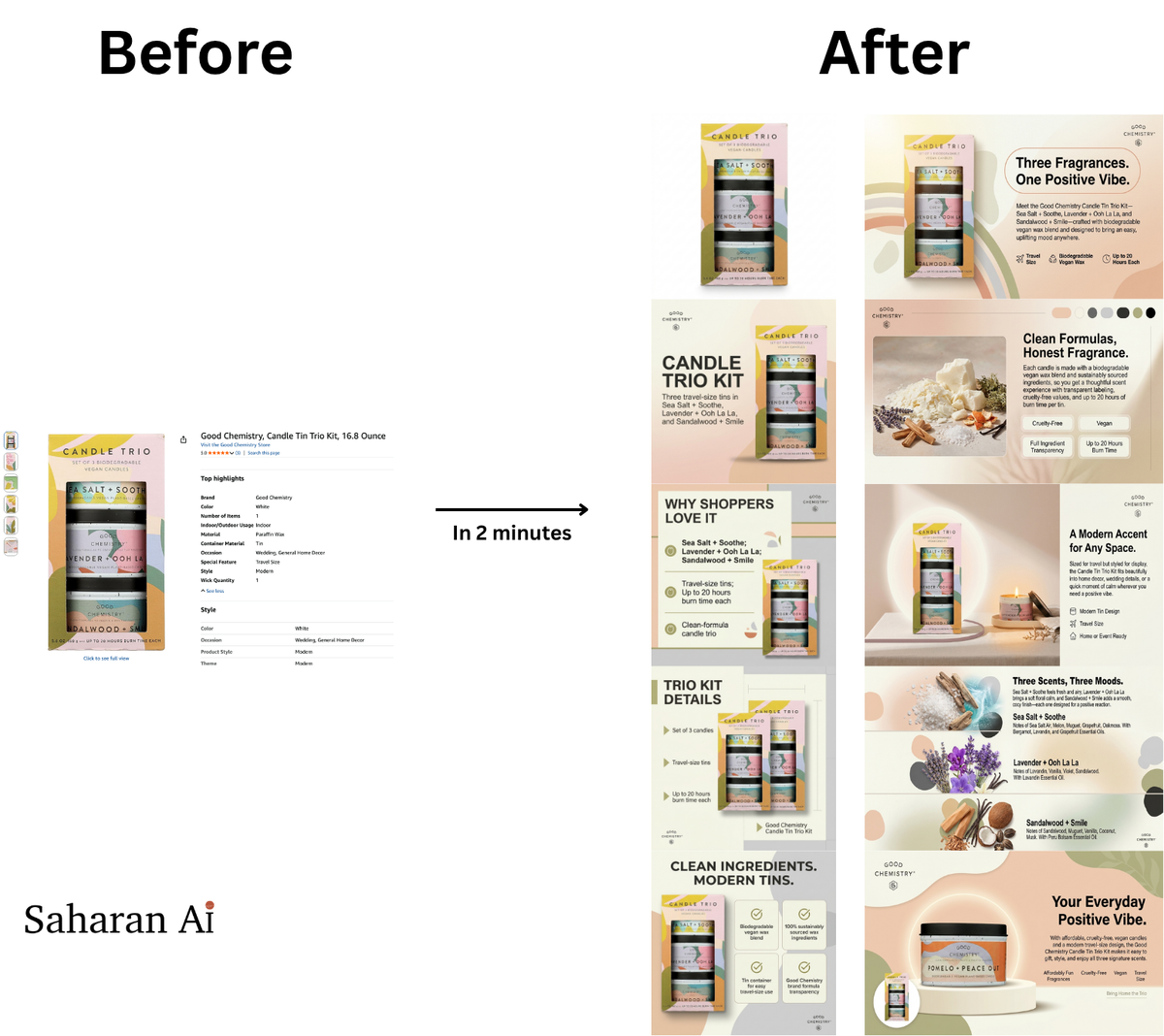
You used to pack specs, sizes, and use cases into a long title. That's gone. So where does that information go now? Into your images. Into your A+ Content. Into the visual story on the page.
This is the shift. The title tells buyers what the product is. Your creatives now have to explain why it's right for them. Materials, dimensions, comparisons, use cases. The detail that no longer fits in text needs to live in the design.
Listing images were always important. After July 27, they're doing double duty. A weak image stack used to cost you a few clicks. Now it costs you the information buyers can no longer find anywhere else on the page.
That's a lot of design work across a full catalog. And it has to stay on-brand, accurate, and consistent listing to listing.
This is exactly what Saharan AI handles. Submit your product and the agent produces listing images and A+ Content built to carry the product information your title can no longer hold. Specs, use cases, and comparisons rendered cleanly, on-brand, at scale. You get finished creatives without the manual grind. The agent handles it.
The bigger picture
This is the pattern now. Amazon keeps shifting how listings work, and the changes keep landing fast. Manual rewrites across a full catalog don't scale. Generic AI rewrites don't protect your ranking.
The right move is structured, on-brand listing work that respects the new limits and keeps your keywords intact. Compliant titles. Stronger creatives. The SEO you built, protected.
July 27 is the date. The sellers who win this are the ones who take control before the AI does it for them.